
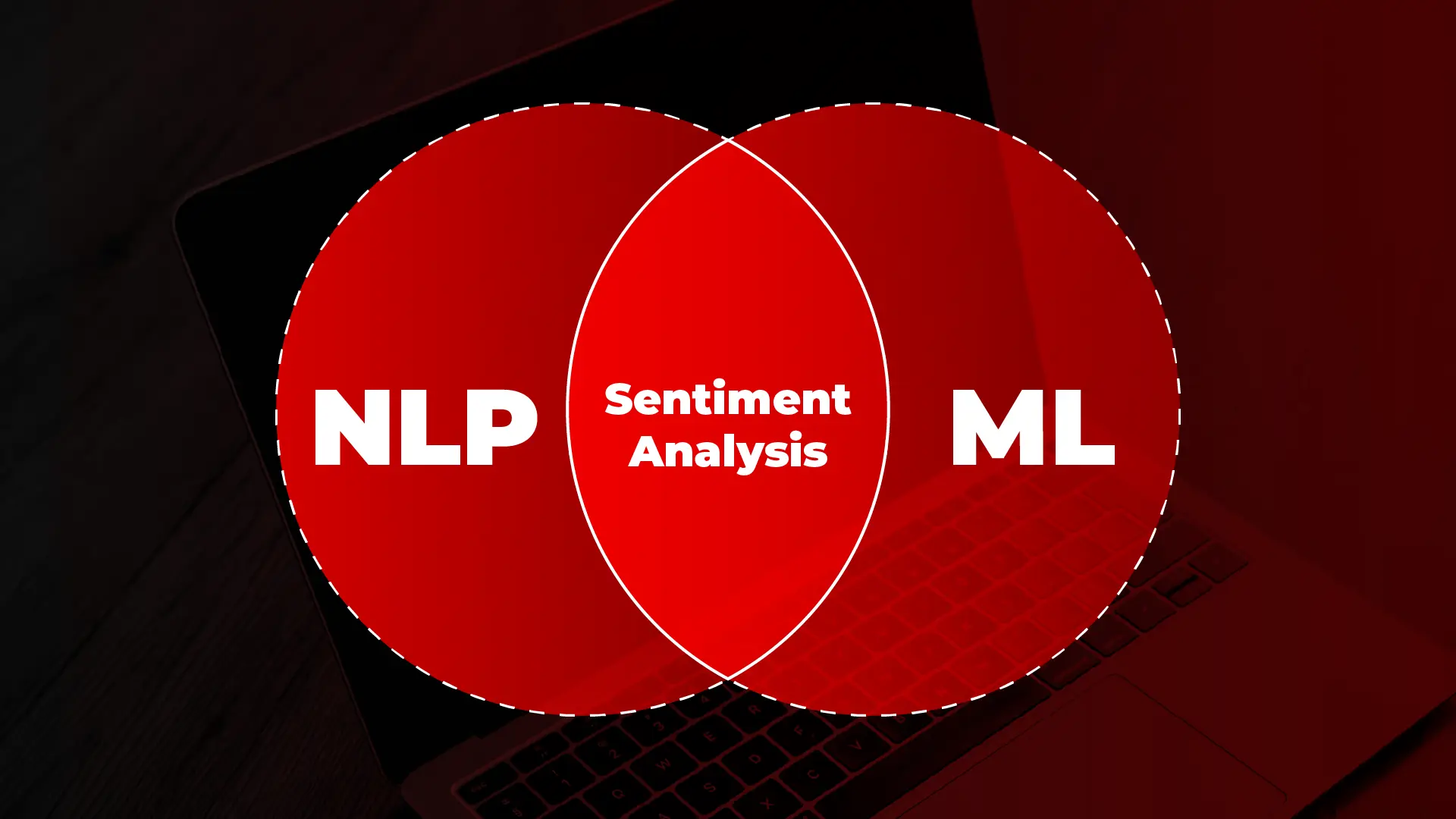
Machine Learning (ML) and Natural Language Processing (NLP) are branches of Artificial Intelligence (AI). Although they have different end goals, both play an important role in handling and processing data. So, what roles do they play in the sentiment analysis process?
In this article, KLIK Group will explain how ML and NLP work together behind the scenes of sentiment analysis.
Understanding ML, NLP, and Sentiment Analysis
To understand how ML and NLP collaborate in the sentiment analysis process, let us first look at the definition of each technology:
Natural Language Processing (NLP)
Natural Language Processing (NLP) is a field that trains computers to learn, understand, interpret, and generate human natural language.
Machine Learning (ML)
Machine Learning (ML) is a branch of Artificial Intelligence (AI) that enables computers to learn from training data and improve over time without being explicitly programmed in a complex way. When faced with new data, ML models can learn and adapt independently.
Sentiment Analysis
Sentiment Analysis is a technology used to classify text and identify the opinions and emotions contained within it. Text is categorized into negative, neutral, or positive sentiments.
The Role of NLP & ML in the Sentiment Analysis Process
NLP and ML play key roles in text classification methods used in sentiment analysis. Generally, sentiment analysis uses three approaches to identify emotions in text, such as:
- Lexicon-Based/Rule Based Sentiment
The lexicon-based approach relies on a dictionary or list of words that have been labeled with sentiment values (positive, negative, or neutral).
This dictionary is then used to classify the emotions contained in a text. This process heavily depends on core NLP concepts, where computers are trained to understand human natural language. - Machine Learning-Based
The machine learning–based approach builds a classification model that is trained using thousands of labeled data samples (positive, negative, and neutral).
With this method, sentiment analysis can understand the meaning of text based on emotion and context. This process relies on the ability of ML models to learn independently from data and improve as the number of cases and data grows. - Combined Approach
As the name suggests, this approach combines the capabilities of lexicon/rule-based methods to process unlabeled data. The labeled data is then used to train ML models, allowing them to learn independently and improve over time.
Key Points
In the sentiment analysis process, Natural Language Processing (NLP) plays a role in helping systems understand human language, such as processing text, recognizing sentence structures, and extracting meaning from text.
Once the text is understood and represented as data, Machine Learning (ML) takes over to learn sentiment patterns, perform sentiment classification (positive, negative, or neutral), and continuously improve prediction accuracy as more data and experience are accumulated.

Unlock Deeper Business Sentiment Insights!
With over 12 years of experience in Digital Transformation, KLIK Group is ready to help you implement AI-powered sentiment analysis to generate high-value business insights.
RELATED POST
Infographic: Utilization of Sentiment Analysis for Social Media
Nov 28, 2025
Identify The Right Type of Sentiment Analysis for Your Business
Nov 05, 2025
Key Success Factors of Sentiment Analysis
Oct 23, 2025